
THANK YOU FOR SUBSCRIBING

Technology to Facilitate Business
× 
Applied Technology Review Weekly Brief
Be first to read the latest tech news, Industry Leader's Insights, and CIO interviews of medium and large enterprises exclusively from Applied Technology Review
Applied Technology Review: Specials Magazine
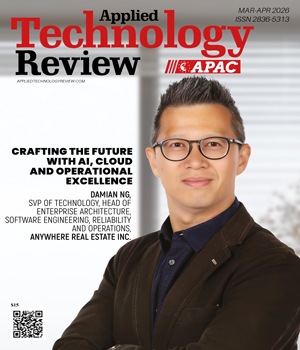
I have been in the technology field for more than 25 years, working in various industries such as e-commerce, payments, fintech and healthcare. Before joining Anywhere, I was the Managing Director of Architecture for Evernorth, a division of Cigna. I joined Anywhere Real Estate three years ago to lead the strategic direction and execution of enterprise architecture, software engineering, operations and application reliability. Challenges while Ensuring System Consistency Ensuring system consistency as enterprise systems increasingly integrate AI, machine learning (ML) and automation presents several challenges. One major issue is maintaining data quality and consistency, as inaccurate or outdated data can lead to unreliable outputs and inconsistent system behavior. Another challenge is model drift, where AI models become less accurate over time, resulting in inconsistencies in system performance. Integrating AI and ML into existing systems can also be complex, introducing potential inconsistencies. Scalability is a concern, as AI and ML models must scale effectively without compromising performance or consistency. To mitigate these risks, Anywhere uses open-source technology to build AI Foundational Services, allowing teams to access and switch different LLMs using the same service, ensuring consistency. Our service tracks model spends and usage, offering early observability on use cases, reducing uncertainty about AI costs. Additionally, our repeatable architecture for chat features ensures consistent deployment and reduces the need for custom solutions.
Satellite Communication Solution
DataPath, a Gilat company and leading provider in satellite communications (SATCOM) solutions, is paving the way for next-generation capabilities with its 30+ years of industry experience. Its tried-and-tested ground systems and modem technology form the foundation for new offerings that fortify the company’s position as a go-to partner for defense end-users. Historically, defense sectors in the U.S. and allied nations relied on geostationary satellites with commercial frequencies like Ku and C bands. These required large dishes that made them less mobile. Recently, the focus shifted to medium earth orbit (MEO) and low earth orbit (LEO), with companies like SES, Starlink, OneWeb, Amazon Kuiper and Telesat deploying satellite constellations in these proximities to offer improved capabilities. This change is driving a pronounced need for advancements in satellite technologies. Capitalizing on the demand for advanced satellite technologies, DataPath’s next-gen antennas connect to multiple networks even in highly contested or congested environments. They enable tactical forces to flexibly, rapidly and reliably connect to new orbits and gain much-needed visibility. DataPath’s solutions also feature new modem technology and multi-orbit compatibility (Ka and Ku bands at MEO and GEO) that offer extensive resiliency and portability, representing a significant advancement in SATCOM technology. Like all of their products, they are made in the United States in their Atlanta, Georgia state-of-the-art production facility. Our advancements in transportable Our advancements in transportable ground systems and multi-orbit modem technology provide for reliable, resilient and secure communications when connectivity is most critical ground systems and multi-orbit modem technology provide for reliable, resilient and secure communications when connectivity is most critical,” says Nicole Robinson, president.

GEO Satcom Solution

Founded on the principle of customer-centric innovation, UltiSat provides a complete portfolio of remote connectivity solutions tailored to the unique demands of high-consequence missions. For over 30 years, the company has delivered cutting-edge, resilient communications to organizations operating in some of the world's most challenging environments. Its clients range from defense and civilian government agencies to humanitarian aid organizations and critical infrastructure providers. Rapidly emerging new communications technologies, including 5G wireless networks and new low Earth orbit (LEO) satellite constellations, offer promising capabilities for remote users. But separating marketing hype from mission readiness can be a challenge. “We specialize in providing field-proven connectivity solutions for missions that demand the highest levels of performance and security," says David Myers, president and CEO of UltiSat. UltiSat’s ability to engineer bespoke solutions in-house — including satellite, wireless and terrestrial technologies — sets it apart in the market. The company takes a vendor-neutral approach, evaluating the best technology for the mission of developing a tailor-made solution. UltiSat solutions encompass initial design, complete remote equipment, connectivity, user bandwidth, field installation and 24/7 live support. The company’s value proposition is its Unified Multi-path Connectivity™ (UMC) approach. It intelligently combines multiple satellite, wireless and wired technologies into a seamless, high-reliability connection for real-time situational awareness, operational decision-making and personnel safety. This is enabled by UltiSat's Sigma Gemini™ appliance, that optimizes throughput and resiliency through advance software defined networking. For clients operating in remote or contested locations, this type of multi-path reliability is paramount.
Silicon-Cmos Swir Image Sensor Solution
Short-Wave Infrared (SWIR) technology has seen remarkable advancements in recent years, driving innovation across a range of industries, from smartphones and automotive to healthcare and security. While the benefits of this cutting-edge technology are undeniable, the high costs of development and implementation often put it out of reach for many industries, particularly smaller players or those with limited budgets. SeeDevice Inc. is breaking this mold by blending advanced capabilities with affordability The company offers a sensor that detects a wide range of wavelengths using a unique, silicon-based CMOS process. The result is a game-changing SWIR solution that’s transforming sectors from agriculture to healthcare, gaming, and automotive, all without the high costs typically associated with such advancements. A VISION THAT BEGAN ALMOST A DECADE AGO SeeDevice Inc. was founded nearly a decade ago by Dr. Hoon Kim, whose deep experience in technology and research laid the groundwork for the company’s innovation. Before establishing SeeDevice, Dr. Kim served as a professor at the University of Utah and as the director of Nano Quantum Devices Center at KETI (Korea Electronics Technology Institute). With a strong academic background and a proven track record in technological development, Dr. Kim’s move into the private sector was driven by his desire to create practical, scalable solutions for industries in need of advanced imaging technologies. His journey began with the aim of bridging the gap between high-performance imaging sensors and the cost-prohibitive technologies that were limiting their widespread adoption. Prior to SeeDevice’s inception, most image sensors capable of detecting wavelengths across the electromagnetic spectrum relied on rare, expensive materials such as indium gallium arsenide or germanium. These materials were costly and difficult to scale, limiting their availability and affordability for many applications. Dr. Kim’s breakthrough came when he developed a patented technology based on pure silicon. By incorporating the quantum tunnelling effect and plasmonic field enhancement into his design, he was able to create a CMOS image sensor capable of detecting wavelengths from the X-Ray range all the way to short-wave infrared. This groundbreaking sensor has since set SeeDevice apart from competitors and opened new possibilities in imaging. QUANTUM-DRIVEN INNOVATION SeeDevice’s ability to detect such a broad spectrum of wavelengths with precision and affordability makes it unique. The company’s sensors are based on a quantum-driven innovation that combines two fundamental concepts: the quantum tunnelling effect and plasmonic field enhancement.

CXO INSIGHTS

The Future of Human Interaction with Consumer Electronics: Meeting the Sensor Needs
Neomar Giacomini, Industry Partnerships - Advanced Development and Innovation, Whirlpool [NYSE: WHR]

Navigating the Future: Geospatial Technology's Impact on Transportation Design
Matt Laluzerne, National Director Of Business Development And Geospatial Services, Mckim & Creed

Drone Application in Construction Industry
Henry Chan, Deputy Construction Manager, Dragages Hong Kong Limited

E is The Beauty of Esports
Yi Liu, Head of Gaming and eSports, Content+, Mindshare

The Art of the 30-Second Video: How to Hook Your Audience Fast
Robert Jarzen, Creative Director; Audacy

Navigating AI and Investment Management
Argyro (IRO) Tasitsiomi, Head of AI, Investments Data Science & Research, T. Rowe Price

The Ultimate SAP Cloud Upgrade Playbook
Pete Hogan, Senior Vice President Of Information Technology, Compana Pet Brands


IN FOCUS


The Expanding Horizons of Image Sensor Innovation
The image sensor industry is innovating rapidly, enhancing applications in consumer, industrial, automotive, and healthcare sectors through improved CMOS architectures, AI integration, and expanded spectral sensing capabilities.
EDITORIAL
The Evolving Landscape of Applied Technology in the U.S.
The Applied Technology market in the U.S. is undergoing a profound transformation, fueled by rapid innovation, cross-industry convergence, and an ever-growing demand for intelligent, efficient solutions. Once viewed as a niche segment, applied technology has evolved into a critical backbone of nearly every major sector — from manufacturing and agriculture to healthcare, logistics, and energy. This dynamic field blends practical engineering with data-driven software and emerging technologies like artificial intelligence (AI), the Internet of Things (IoT), robotics, and automation to address real-world challenges and enhance operational performance at scale.
At the core of this evolution lies a surge in digital transformation initiatives aimed at improving productivity, sustainability, and decision-making capabilities. U.S. enterprises are making strategic investments in smart infrastructure, predictive analytics, and machine learning tools to sharpen their competitive edge in an increasingly globalized marketplace. Whether it’s automating factory floors, enabling precision farming, streamlining supply chains, or revolutionizing patient care, applied technology has become a key enabler of progress and innovation.
Government support has further catalyzed this growth. Publicprivate partnerships, targeted funding, and ongoing investment in research institutions have provided fertile ground for the advancement and commercialization of applied technologies. At the same time, startups and agile tech innovators are bridging traditional industries with forward-looking solutions that are scalable, customizable, and impactful across diverse environments.
Nevertheless, the sector faces significant challenges. Talent shortages, cybersecurity vulnerabilities, and the pressing need for interoperability and standardized platforms all demand strategic focus. As the U.S. applied technology market matures, collaboration between tech developers, industry stakeholders, and regulators will be essential to unlocking its full potential.
In this issue, we explore how leading companies, forward thinkers, and disruptive startups are redefining what’s possible with applied technology in the U.S. From groundbreaking use cases to strategic insights, we highlight the trends shaping the future — and underscore why this is a defining moment for applied technology to lead the way in building a smarter, more resilient economy.

Top
