
THANK YOU FOR SUBSCRIBING

Technology to Facilitate Business
× 
Applied Technology Review Weekly Brief
Be first to read the latest tech news, Industry Leader's Insights, and CIO interviews of medium and large enterprises exclusively from Applied Technology Review
Applied Technology Review: Specials Magazine
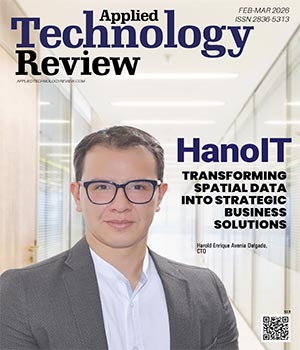
Across sectors that depend on spatial intelligence, organizations are entering a pivotal period of modernization. State and local governments are upgrading infrastructure with new funding, utilities are moving toward predictive, data-driven operations, and public safety agencies are adopting real-time situational awareness. Engineering and environmental firms are also accelerating analysis and reporting to meet rising expectations for speed and transparency. While these sectors differ in mission, they share a common reality: geography underpins many of their most critical operational decisions. Yet many still operate with legacy GIS setups, siloed tools, and licensing models designed for a different era. Disconnected data makes it difficult to maintain a unified view, and scaling GIS across departments or integrating it with IT, analytics, and cloud systems remains challenging. As organizations move toward smart cities, real-time operations, and AI-enabled planning, they are recognizing that GIS must function as an enterprise platform rather than a standalone mapping tool. This is the environment in which HanoIT operates, and it is the gap the company was designed to close. Operating at the intersection of GIS innovation, location intelligence, and digital transformation, HanoIT helps organizations elevate GIS from a standalone tool to a core business system. With deep experience in sectors where spatial accuracy and operational reliability are essential, the company partners with IT and business leaders to modernize, scale, and integrate GIS across the enterprise.
LED Color Sensor Solution
A one-size-fits-all approach is ineffective in LED testing. To develop solutions that meet high-quality standards, it is essential to pay close attention to customers’ needs and drive continuous innovation. FINN Test Electronics (FTE) is a leading industry player that develops quality LED testing sensors with unmatched precision. Its innovative products are used for test and measurement environments within the electronics and manufacturing services sectors. The comprehensive range of FINN LED sensors provides test solutions for many light sources on any test platform— functional, in-circuit or stand-alone. Innovation is embedded in FTE’s DNA. The journey began with its sister company, Test Coach, which develops testing programs and conducts tests on circuit boards for the electronics manufacturing services industry. The growing demand for testing LED sensors on boards led to a situation where the existing solutions failed to fulfill customer needs. FTE took charge and created products that consistently ensured elevated levels of client satisfaction.

Pool & Hot Tub Water Monitor Solution

A sparkling pool or hot tub is a source of relaxation, but maintaining water quality can often feel like a guessing game. Test strips provide inconsistent results, chemical levels fluctuate unexpectedly, and water can quickly turn cloudy or unsafe without frequent monitoring. Homeowners want to enjoy their pools, not spend time troubleshooting water chemistry. Crystal Water Monitor eliminates the guesswork with smart, real-time monitoring and precise recommendations based on over 1000 readings per week. The system includes a water-immersed sensor and an external monitor, protecting sensitive electronics. At the helm of Crystal Water Monitor is Justin Miller, its co-founder and CEO whose journey into water monitoring began in 2014 leading to the launch of pHin in 2017. pHin quickly became the top product in its category, offering pool owners a convenient way to test water quality. However, it was discontinued after being acquired in 2018 due to strategic changes during COVID-19. Recognizing the need for a more robust and precise solution, Miller leveraged years of experience in Silicon Valley, including roles at Apple, eBay, and Comcast, to develop Crystal Water Monitor—a superior product designed to eliminate the issues faced by pHin and other competitors. Unlike pHin’s floating sensor design, which was prone to water seepage and eventual damage to electronic components, the Crystal Water Monitor is built for greater durability and accuracy. This strategic improvement allows the device to provide continuous, real-time readings without the risk of internal damage. “We didn’t just build another product—we built a smarter, more intuitive solution that truly solves the real challenges homeowners face in maintaining their water,” said Miller. Advanced Technology for Smarter Water Care Crystal Water Monitor is more than just a sensor—it’s an intelligent system designed to simplify pool care. Using its mobile app, users can also input additional water chemistry data, including hardness, alkalinity, and cyanuric acid levels. The app also allows users to scan chemical barcodes for precise dosing recommendations, ensuring the right amount of chemicals is added to maintain balanced water conditions. Unlike competing devices that test water chemistry just once daily, Crystal Water Monitor conducts over 1,000 weekly tests. This high-frequency monitoring enables users to track daily chlorine levels, pH balance, and overall water quality fluctuations, preventing common problems before they escalate. The system uses oxidation-reduction potential (ORP), the standard measurement for most commercial pools, to measure sanitizer effectiveness, ensuring a cleaner and safer swimming environment. This feature is great for both pools as well as hot tubs, where rapid chemical shifts occur due to small water volumes and high temperatures. It detects these changes and delivers immediate recommendations, ensuring the water remains safe.
CXO INSIGHTS

Maximizing Efficiency and Reliability: The Benefits of Using Geographic Information System (GIS) for Utility Infrastructure Management
Tracey Foster Milton, Director Of Gis And Asset Management, Waggoner Engineering

Building the Infrastructure for a Robotic Future in Real Estate
Whitney Kidd, Senior Vice President of Innovation and Technology, the Preiss Company

Crafting the Future with AI, Cloud and Operational Excellence
Damian Ng, SVP of Technology, Head of Enterprise Architecture, Software Engineering, Reliability and Operations, Anywhere Real Estate Inc

Driving Digital Transformation in Commercial Real Estate
Dusti Wofford, Global Head of Digital Strategy & Technology, CBRE [NYSE: CBRE]

Unlocking Success In Real Estate Technology
Nathan Kimpel, Head of Technology – Multifamily, Cushman & Wakefield


IN FOCUS
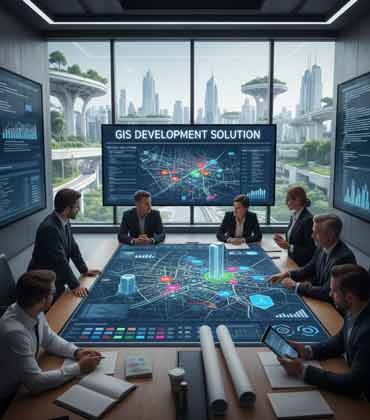
Building Intelligent Spatial Infrastructure for a Connected World
Geospatial technology now powers the digital economy, with AI, cloud-native GIS, real-time data, and 3D/AR visualization driving smarter, predictive, and accessible spatial solutions across industries.

Trends Influencing GIS Development Across Diverse Industries
GIS development solutions advance through intelligent analytics, cloud scalability, system integration, and expanding adoption across infrastructure, environmental management, logistics, and public services.
EDITORIAL
Spatial Intelligence as Enterprise Infrastructure
Across sectors driven by infrastructure, utilities, and public services, geographic data is evolving from a supporting function into a strategic platform for operational control and long-term planning. This issue examines how enterprises across infrastructure, utilities, engineering, and public services are redefining spatial intelligence as a core operational capability in environments that increasingly demand real-time visibility, integration, and enterprise-scale decision-making.
Our cover story recognizes HanoIT as the Top GIS Development Solution 2026 for repositioning GIS as a mission-critical enterprise platform. Operating at the intersection of location intelligence and digital transformation, HanoIT designs architecture-first environments that unify data, workflows, licensing, security, and analytics. Its approach integrates on-premises, cloud, and hybrid models while optimizing licensing and ensuring interoperability. By embedding advanced analytics, IoT integrations, and AI into GIS workflows, HanoIT enables predictive maintenance, routing optimization, environmental modeling, and executive-level dashboards. The result is a resilient, scalable system of record that supports both daily operations and long-term planning.
This edition also features leadership perspectives that address execution discipline across complex operating environments. Nathan Kimpel, Head of Technology Multifamily at Cushman & Wakefield, outlines a platform leadership model grounded in clear guardrails, vendor governance, security-by-design principles, and incremental value delivery. His emphasis on identity-centric security, zero trust, and operational alignment underscores the convergence of digital and physical systems.
Kyle Moore, Senior Vice President of Construction at Landmark Properties, examines supply chain volatility and the operational controls required to sustain project delivery. Through standardized product strategy, early design involvement, and strong vendor relationships, Landmark mitigates disruption while maintaining quality and cost discipline.
What connects these perspectives is a shared commitment to alignment where architecture, governance, and execution move in concert. Collectively, they underscore a consistent message: enterprise platforms succeed when design discipline and operational rigor are tightly integrated. We invite you to explore the insights in this issue and engage with the leaders shaping the next phase of applied technology.

Top
